Serbia received a clear message from the European Commission in the latest progress report that it must make greater progress also on media freedom if it wants to join the European Union, while United Media in Serbia is seeking to remain outside government control.
The Commission’s latest progress report came amid open pressure from authorities and pro-Vucic broadcasters and tabloids on outlets that are financially and editorially independent of President Aleksandar Vucic’s administration, N1 Zagreb reported.
Those pressures intensified during a year of anti-government protests led by the student movement following the deaths of 16 people in a roof collapse at Novi Sad’s train station.
Suspicions that authorities seek to silence United Media (UM) – part of the international United Group (UG) corporation – particularly the cable news channel N1, its news portal, and several other online and print outlets, were further stoked by an audio recording of a conversation between Vladimir Lucic, head of state-owned Telekom, which controls a significant share of Serbia’s media, and United Group CEO Stan Miller.
The recording, published by the Organized Crime and Corruption Reporting Project (OCCRP), captured Miller saying to Lucic that he must make United Media (UM) in Serbia, which is part of United Group, “very small” but that he “cannot fire Aleksandra today.” Aleksandra Subotic is United Media’s chief executive.
The conversation implies that it was the Serbian president who requested the dismissal.
“The time for that… I understand that the president called you and that he is very upset, and I can understand. But I need to find a way to do it fast, quick, quick,” Miller said.
Neither he nor Lucic denied the conversation or its authenticity.
Caught “with their pants down”
“Serbian President Vucic and his media henchman Vladimir Lucic got caught with their pants down,” OCCRP co-founder Drew Sullivan later wrote on X.
In response, the program directors of N1 television channels in Serbia, Bosnia and Herzegovina, Croatia and Slovenia proposed a management buyout of N1 from United Group on market terms, with backing from credible outside investors.
The management of N1 and its partner outlets in Serbia – Nova S, Nova.rs, Danas and Radar – then made a formal offer to BC Partners and United Group to acquire 100 percent ownership of the news media in Serbia and the region, N1 Belgrade reported on November 10.
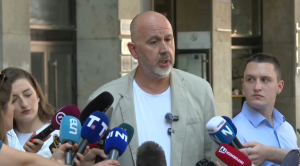
“The offer reflects our intention to preserve our independence and prevent any attempt to undermine it,”” N1 Serbia Program Director Igor Bozic told Hina. “The survival of free journalism in Serbia depends on media such as N1, Nova, Danas and Radar. If United Group’s owners are motivated purely by business, they should see this as an honorable way to withdraw from non-EU markets, as they previously suggested,” he added.
Ranko Pivljanin, editor-in-chief of the Nova daily, described the offer as “an extorted move.”
“It’s the only thing left for us, not to surrender without a fight and to try to preserve what is almost the only free media oasis in the information desert created by the regime,” he told Hina.
He said the intent to shut down United Media outlets was “documented” in the leaked recording.
“The new United Group owners appear determined to discipline or even close down the TV channels, newspapers and portals within the group, in line with the wishes of Serbia’s autocratic ruler. We had no choice but to attempt a management takeover,” Pivljanin said.
He added he was “more fearful than hopeful.”
“We’ve done everything we can to stop the last few candles of independent journalism from being extinguished in Serbia’s media darkness,” Pivljanin said.
Media also attacked by the information minister
Meanwhile, attacks on those outlets, especially N1, have continued. On Wednesday, Serbian Information Minister Boris Bratina, a far-right figure known for burning the EU flag at a nationalist rally in 2009, accused N1 of acting as “an outpost of foreign agencies.”
“That’s why we are seeking legal changes – they shouldn’t even exist in our media space,” Bratina said on pro-government TV channels, adding Radio Free Europe to his list of “anti-Serbian” media.
Bozic said “N1 and other United Media outlets have been targeted since their founding by pro-government tabloids and officials, especially by Serbian President Aleksandar Vucic.”
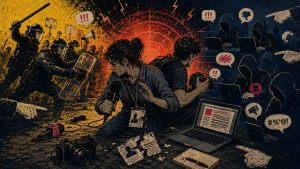
“In the past year, the rhetoric has escalated to the point where we’re called ‘terrorists’ and ‘occupying media’. Our journalists face daily threats, and even physical attacks, sometimes by police, while reporting from protests. All of this shows the regime’s growing nervousness,” Bozic said.
Source: N1