The crisis reporting from the student and other protests that began in November last year exposed all the readiness of the regime to respond to the work of journalists with physical force and pressure.
In the report Reporters Without Borders (RBG) about attacks on journalists in the current year, Serbia took a special place. Although fortunately there were no journalists killed, kidnapped and imprisoned as in other countries mentioned in the report – with which we cannot even compare – 91 physical attacks on journalists were recorded.
Crisis reporting from student and other protests that began in November last year exposed all the regime’s willingness to use physical force and pressure to respond to the work of representatives of the seventh power.
Although this report mostly deals with countries where there is practically a state of war, or where media freedoms are so threatened that there is no semblance that they exist at all, attention was paid to Serbia mainly because of the large number of attacks, but also the fact that those who are supposed to protect journalists participated in them.
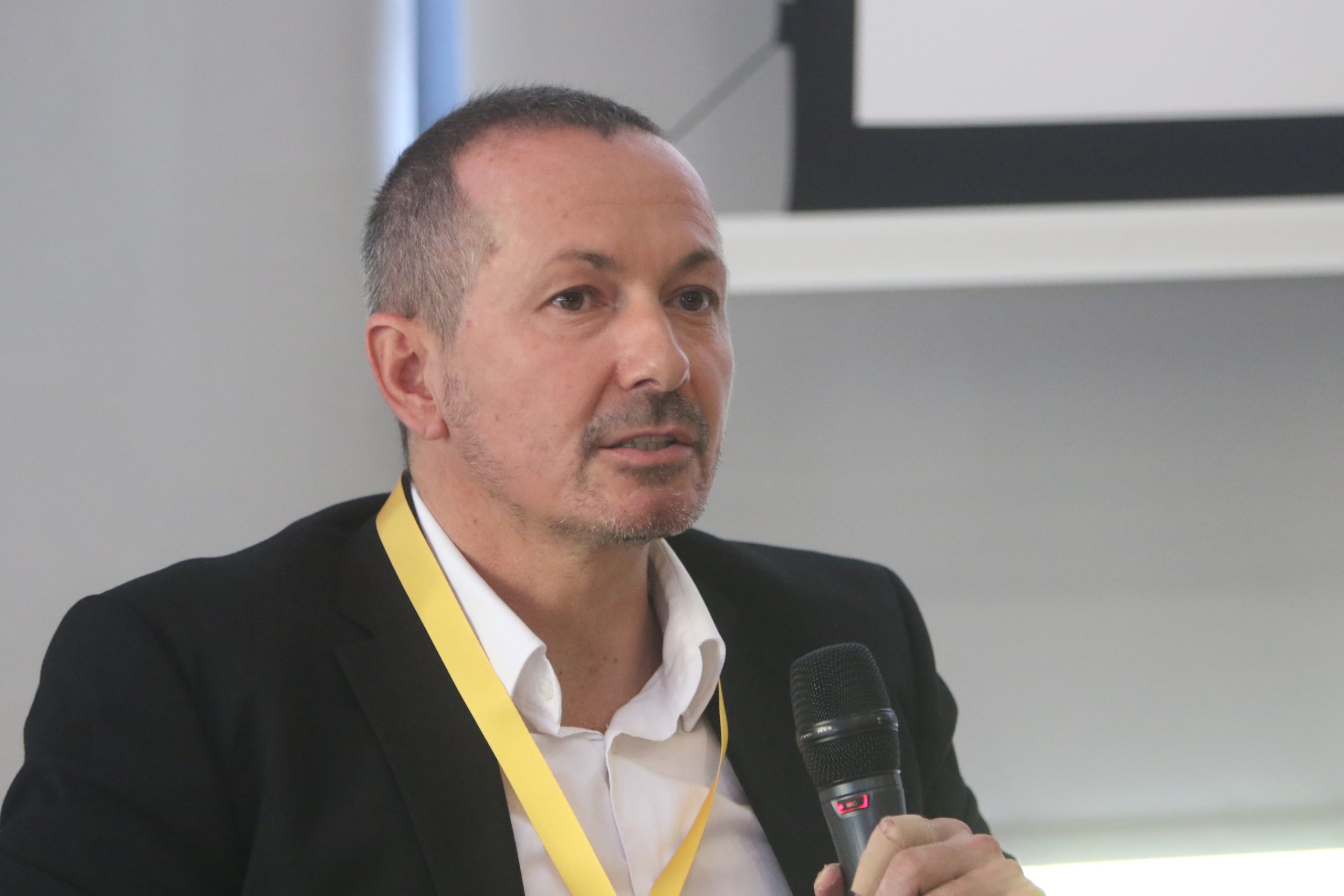
Lawyer and advocate Independent Association of Journalists of Serbia (NUNS) Rade Đurić tells “Vreme” that this report “shows the real state of freedom of expression and media freedom in Serbia.”
Who protects and who attacks?
The specificity is that half of the physical attacks on journalists were carried out by members of the police, according to Reporters Without Borders. To make matters worse, in none of these cases was anyone punished or even held accountable.
In general, in other countries as well, a trend of attacks on journalists during crisis reporting from protests was noted. Also, members of the police and other law enforcement agencies participated in some attacks in other countries.
An additional thing that stands out in the report in the section for Serbia is the political and social atmosphere created from the top of the state, in which journalists are directly targeted and intolerance towards them is promoted.
Consequently, impunity for attackers is also promoted in this way.
Đurić explains that it is important that the report recognizes that “the highest representatives of the government are actually the generators of violence” and “the main driver of the violent narrative towards independent journalists and media”.
The interlocutor of “Vremen” adds that it is important that the report recognizes the “completely changed role of the police”, which, as he says, is under the enormous influence of the executive power and is becoming “one of the main tools for journalists”. He believes that the police primarily intimidates young reporters with their actions, and that as a result we have numerous physical attacks and detentions, for which they “knowingly do not take responsibility”, sending the message that “such a threatening relationship will continue”.
Media predator
This world network of journalists recently made a list of “predators of media freedom” who, during the year 2025, threatened journalists and the right to information. The names, mostly authoritarian and semi-authoritarian state leaders, as well as their parties, organizations and ministries were found on it. A total of 34 names.
In addition to the Communist Party of China and Xi Jinping at its head, Mohammed bin Salman from Saudi Arabia, Vladimir Putin and Alexander Lukashenko, there are also the Israel Defense Forces (IDF) – responsible for the death of almost 220 journalists, the Peace and Security Commission of the State of Myanmar, the military junta in Burkina Faso and many others.
All of them stood out again in the persecution of journalists and the media in 2025.
However, the President of Serbia, Aleksandar Vučić, was also on the list. RFE included him in that society for 89 attacks on journalists (as of writing the report) during various protests since the fall of the canopy in November 2024.
And in October 2025, the European Parliament adopted a resolution strongly criticizing the regime of President Aleksandar Vučić – precisely because of physical violence against journalists, propaganda and smear campaigns encouraged by pro-government media and Vučić’s supporters.
Jump into space
According to the world media freedom index published by Reporters Without Borders at the beginning of May for the year 2024, Serbia rose from 98th place to 96th place. However, although at first glance it seems that there has been an improvement in media freedom in the country, it is an illusion. The situation is actually the opposite – it has worsened.
The jump of two places in the table happened because media freedom worsened in other countries around the place occupied by Serbia, so they fell even more. Political pressure, verbal and physical attacks on journalists, threats, as well as fake news and propaganda distributed through pro-regime media are cited as the reasons for the deterioration.
Compared to the region of the Western Balkans, only Kosovo is in a worse place in the report.
Rade Đurić believes that the government’s behavior towards journalists, which Reporters Without Borders dealt with, seems to be aimed at “intimidating” journalists and giving up reporting. But, as he adds, it is important to send the right picture to the international public about how unsafe Serbia is for independent journalists.
Source: Vreme