If 2024 was a year of warning, 2025 was a year of confirmation: pressure on journalists in Serbia is no longer incidental – it has become a pattern. The Independent Journalists’ Association of Serbia (NUNS) recorded 371 cases of threats to journalists’ safety in 2025 (compared to 168 in 2024), including 113 physical attacks and 165 threats. At the same time, international platforms report the same trend: Mapping Media Freedom registered 203 cases, placing Serbia at the top of Europe in terms of risk for journalists, while cases from Serbia account for 15.9% of all reports from 46 member states on the Council of Europe Platform. These figures are not mere statistics; they are a map of a society in which critical reporting is increasingly treated as a hostile act.
The atmosphere has been further inflamed by verbal attacks and delegitimization campaigns coming from the highest levels of government and the most visible representatives of the ruling majority. Monitoring by the Slavko Ćuruvija Foundation shows that since August, the number of aggressive statements against journalists and the media has not fallen below 137 per month. In such an environment, journalists are publicly labeled as “traitors,” “foreign mercenaries,” and even “terrorists,” criminalizing their professional role and normalizing violence against them. In 2025, public officials and office holders who stood out in participating in such attacks included Nebojša Bakarec, Boris Bratina, Aleksandar Vučić, Ana Brnabić, and Vladimir Đukanović. When critical media are treated as targets rather than as a corrective force, the consequences do not stop at headlines—they spill over into the streets, newsrooms, and social media.
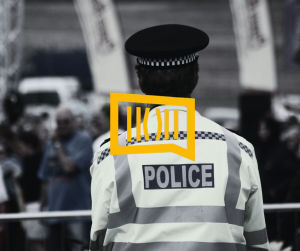
One of the most alarming shifts this year is the fact that the police have increasingly become a source of risk rather than protection. According to official data from the Prosecutor’s Office, in 2024 there were 64 recorded cases of threats to journalists’ safety, in 34 of which the police failed to act on prosecutorial orders. In 2025 (through the end of November), the Prosecutor’s Office recorded 117 cases, and in 50 of them the police did not act on orders—representing the highest number since 2016, when the Prosecutor’s Office began keeping such records. NUNS data further show that from March to December there were 77 cases in which the police either passively observed attacks or actively used force against clearly identified journalists. This represents a dangerous paradigm shift: from “inaction” to “action” to the detriment of journalists.
Pressures are not only physical and verbal; they are also professional, legal, and existential. The media sector remains marked by precarious forms of engagement, limited labor rights, and the vulnerability of those working outside formal employment. During 2025, at least 20 cases were reported of dismissals or disciplinary measures against journalists who refused political abuse of editorial offices, particularly in media owned by Telekom and at public broadcasters. At the same time, the closure of Al Jazeera Balkans and the risk of shutting down Radio Free Europe and other independent outlets due to donor withdrawal further narrowed an already fragile media market. SLAPP lawsuits remain a systemic mechanism of pressure, with NUNS recording five new cases, while a new, sophisticated risk has emerged: spyware—one confirmed compromise of a journalist’s phone and at least three failed attempts.
Structural weaknesses of the state in protecting pluralism remain deep. In addition to concerns about possible government interference in relations between Telekom Srbija and the owners of United Media, 2025 was also marked by a prolonged institutional vacuum in the Regulatory Authority for Electronic Media (REM). The regulator remained incomplete for more than a year, effectively preventing it from performing its legal role in protecting pluralism. The process of electing the REM Council was accompanied by a series of controversial decisions: annulment of the previous call, a non-transparent procedure, the election of eight out of nine members on November 12, failure to elect a representative of a national minority, followed by the resignation of four elected, credible members on December 19, citing that the process had been rendered meaningless. This led to a new procedure for electing four members at the end of December. A REM without legitimacy and capacity means a REM without real power to protect citizens from media abuse and political propaganda.
Legislative changes also failed to bring stabilization—on the contrary, they further reinforced the sense that reforms are being implemented formally, without substantive guarantees. Amendments to three key media laws (the Law on Public Information and Media, the Law on Electronic Media, and the Law on Public Media Services) were rushed to completion during 2025, with short deadlines and a lack of transparency, and without public debate on the final draft versions. Although certain provisions of the Law on Public Information and Media (Articles 84 and 85) were corrected following professional interventions, key problems remain: unregulated public procurement of media services, the return of the state to media ownership, and Article 39a, which introduces obligations for media in (direct or indirect) state ownership without independent oversight or sanctions. In the Law on Electronic Media, the opportunity was once again missed to regulate election campaigns; officials’ campaigns and political marketing remain outside the regulatory framework. At the end of November, the Ministry reopened a new round of amendments and the drafting of a new Media Strategy for 2026–2030, involving numerous GONGO actors while marginalizing key independent associations and trade unions; on November 27, NUNS formally refused to participate in such a process.
A particularly important chapter of 2025 concerns the project-based co-financing of media content—an area in which public money is turned into an instrument of political influence. A total of 1,621,825,500 dinars was planned, and 1,474,707,276 dinars were allocated. The first cycle of implementing the Unified Information System (JIS) was marked by serious shortcomings: technical failures, lack of clarity, inability to make corrections without an administrator, delays in publishing ranking lists, and the risk of non-transparent changes and backdating. The development of the JIS cost 83,849,040 dinars including VAT (approximately €715,000), yet the core problem—political allocation of funds and support for media outlets that violate the Code of Ethics—remained evident. A record amount per project was awarded in Novi Pazar—30,800,000 dinars to RTV Novi Pazar—while at the other end of the spectrum, symbolic allocations of 20,000 dinars were recorded (Golubac and Nova Crnja). Among the “record holders” in terms of participation in selection committees are PROUNS and DNV, as well as individuals engaged in dozens of committees, further fueling suspicions of concentrated influence and a closed decision-making circle.
Serbia’s image in international reports fully mirrors this internal reality. In the 2025 RSF World Press Freedom Index, Serbia ranks 96th out of 180 countries; Freedom House assesses it as a partially free country (56/100), and in the domain of internet freedom Serbia has, for the first time since this area has been measured, also been classified as partially free (67/100). In its annual progress report on Serbia, the European Union noted regression in the area of freedom of expression for the first time—sending a signal that the crisis can no longer be relativized as an “internal matter” or a passing political phase.
That is why 2025 leaves a clear message: without genuine institutions, accountability, and transparent rules, media freedom is not “maintained”—it is depleted. And when it is depleted, the cost is not only professional; it is democratic. In the period ahead, NUNS will continue to document attacks and pressures, provide legal and psychosocial support to journalists, insist on institutional accountability, and defend citizens’ right to be informed truthfully, freely, and without fear. 2025 has taught us that this work is harder than ever—but also more important than ever.