After the appearance of an AI announcer on “Happy” television, the question arises whether this will be the future of television reporting or whether it is just a scam. How can viewers recognize presenters who are robots, products of artificial intelligence?
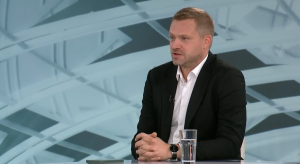
Television “Happy” made in new technological experiment in the domestic media space – they appeared in the program presenters generated by artificial intelligence. As announced by the Association of Journalists of Serbia (UNS), this is the first case in Serbia that on television with a national frequency, news is read using AI “speakers”, instead of real presenters.
AI presenters are presented under the names of Bojana Filipović and Marko Popović, and their role, as stated by the television, is to facilitate and modernize the presentation of content. Viewers, however, are not informed in advance that these are generated characters, which raises the question of the professionalism and transparency of the work of this television.
In their response to UNS, “Happi” stated that virtual presenters do not replace journalists and editors, but serve as technological support for production. According to their claims, behind every piece of information there are still teams of journalists who check and edit the content, while AI is used solely as a presentation tool.
Television management also says that they see the future of media in a combination of human work and technological innovation, emphasizing that changes are introduced “thoughtfully and responsibly”.
Future or deception?
The emergence of AI presenters will open a much wider debate in the media industry: is it a natural step in the evolution of television or a potential violation of audience trust? Proponents of the technology argue that artificial intelligence can speed up production, cut costs and enable new formats of information, especially in broadcasts based on standardized news.
On the other hand, critics warn that not flagging AI-generated presenters could blur the line between real and artificially created content. The issue of trust is particularly contentious – because television is traditionally based on the idea that the viewer sees a “live” journalist who bears professional responsibility for the spoken word.
Examples from the world: AI presenters already on screens
Similar experiments have already been seen in the world media. The British public service Channel 4 showed an experimental feature with an AI presenter as part of a special project on the future of television, presenting it as a test of the boundaries between technology and journalism. The project caused a wide discussion about ethics and transparency in information.
AI “presenters” have also been emerging in Asia and on global platforms, particularly in news formats and digital channels, where artificially generated anchors are used for breaking news and automated broadcasts.
In some cases, such as China’s state media, AI announcers have already become part of the regular experimental program.
How viewers can tell the difference
Viewers are advised to pay attention to a few things in the broadcast that may give away the AI-generated host. These are primarily the unnatural movements of the presenter that appear, the absence of spontaneous reactions, as well as the uniform tone of speech without the variations that are typical of human speech.
The transparency of the broadcaster is also an important indicator – professional standards require that television clearly indicate when artificial intelligence is used in the presentation of content.
Also, viewers should check information from multiple sources, especially when it comes to new formats and experimental shows that combine technology and journalism.
Source: Vreme