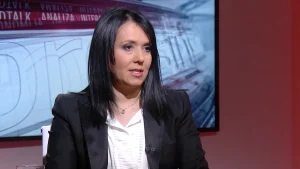
The Independent Journalists’ Association of Serbia (IJAS) condemns in the strongest terms the interception of communications and surveillance of the editor-in-chief and journalists of the weekly Radar, as disclosed by its editorial team. We demand the immediate dismissal of Vladimir Orlić as Director of the Security Information Agency (BIA) and an independent and effective investigation into the responsibility of everyone who proposed, authorised and implemented the surveillance measures. The interception of communications within a newsroom poses a serious threat to privacy, the confidentiality of journalistic sources and media freedom.
According to Radar, BIA Director Vladimir Orlić submitted a request to the Higher Court in Belgrade for covert surveillance measures targeting editor-in-chief Vesna Mališić and journalists Sandra Petrušić and Milan Radonjić. The editorial team states that the court first authorised these measures on 12 June 2026 and subsequently extended them on 15 July and 9 September.
The authorised measures included recording communications on the premises housing Radar’s newsroom. Such a measure enables the surveillance of communications involving other members of the editorial team, as well as their interviewees and sources, extending the consequences of interception beyond the individuals formally targeted by the measures.
Radar also reported that Orlić had exercised his discretionary authority to order ten days of physical surveillance of certain members of the editorial team. According to the same reports, on 22 October, the day Radar’s final issue before the elections was published, the BIA Director submitted a proposal to the President of the Higher Court in Belgrade to discontinue all measures.
IJAS considers these allegations to indicate a serious abuse of the security services against journalists covering matters of public interest.
We demand that the competent prosecutor’s office promptly examine all the circumstances of this case and that the relevant authorities conduct an oversight review of BIA’s work. It is essential to establish the specific facts on which the requests and authorisations were based, how the necessity and proportionality of the measures were justified, what data were collected, who accessed them and whether they were used for purposes other than those for which the surveillance was authorised. Responsibility for the judicial authorisation and extension of the measures must also be examined.
Judicial authorisation does not in itself rule out abuse or absolve those who propose, authorise and implement the measures of responsibility. The public must receive answers.
The question remains: on the basis of what specific evidence did the court authorise surveillance measures in relation to the alleged criminal offence, and what indicated grounds for suspicion that a criminal offence had been committed?
We recall that independent forensic analyses have already documented cases of digital surveillance targeting journalists in Serbia. Amnesty International reported that two BIRN journalists had been targeted in attempted Pegasus spyware attacks, while the cases of Dimitrovgrad journalist Slaviša Milanov and journalist Ljubomir Stefanović have also been documented.
Covert surveillance of journalists also endangers all citizens who provide them with information about corruption, abuses and other matters of public interest. The knowledge that security services can monitor conversations within a newsroom intimidates sources and hinders investigative journalism.
We recall that the case law of the European Court of Human Rights requires surveillance to have a legal basis and to be necessary and proportionate to a legitimate aim, with effective safeguards against abuse and special protection for confidential journalistic material and sources. The UN Human Rights Council’s 2025 resolution on the safety of journalists explicitly condemns arbitrary or unlawful surveillance of journalists and media workers.
The European Media Freedom Act (EMFA), as an important European standard, also establishes strict restrictions on the surveillance of communications and the use of intrusive spyware against journalists and persons associated with them. Exceptions require strict conditions to be met, independent authorisation and an assessment of whether the objective can be achieved through less intrusive measures.
IJAS demands an end to all unlawful and arbitrary surveillance of journalists and full accountability for abuses. Security services must not be used to control newsrooms, identify journalistic sources or intimidate those reporting in the public interest.
Independent Journalists’ Association of Serbia
Belgrade, 4 November 2026