Australia has become a significant hub for climate change misinformation. But the challenge for the country’s journalists is complex and warrants not only an industry wake-up call but a national response to sustain strong journalism into the future, writes Amy Fallon.
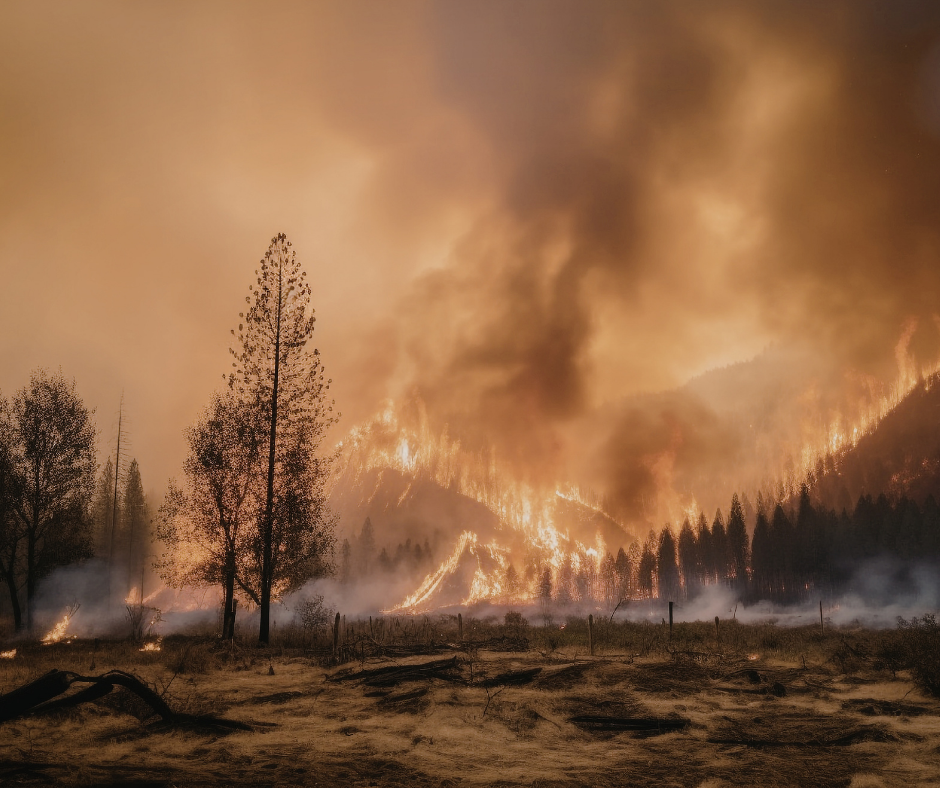
In January 2020, at the height of Australia’s worst bushfires, the hashtag #ArsonEmergency went viral on social media. According to one narrative, the “Black summer” fires that made front pages across the globe were not caused by climate change.
The claim that nearly 200 “arsonists” had been arrested for starting the fires was misleading. In reality, legal action had been taken against 183 people since November 2019 for fire-related offences, including minor crimes like improperly discarding cigarettes or not taking enough precautions around machinery. This was clearly outlined in a New South Wales (NSW) Police Force media release. In reality, only about 24 people had actually been charged.
But by the time this false narrative, which was likely to have caused confusion and contributed towards weakened public debate and intimidation against activists and scientists, was debunked, it was too late. The fuel had already been poured on a blaze of misinformation, so to speak.
Orchestrated counter-narratives like this are part of a broader wave of climate misinformation and disinformation which Australian journalists say is worsening.
“I definitely think it has ramped up, particularly with the political situation we see in the US,” said Bianca Hall, The Age’s environment and climate reporter, and media vice president of Australia’s Media, Entertainment & Arts Alliance (MEAA), which is also an IFJ affiliate.
“Cuts to universities and research institutions more broadly have made getting accurate information more challenging.”
Climate misinformation watchdogs have noted Australia’s status as a significant hub for climate change misinformation due to the convergence of a powerful fossil fuel industry, concentrated media ownership, and a political landscape which historically leverages climate action as a wedge issue.
Misinformation among Australians in fact “skyrocketed” to 75%, an 11-point increase from 2022 to 2024, with climate change one of the top three issues where misinformation was encountered, according to the 2024 Digital News Report: Australia, published by the University of Canberra’s News and Media Research Centre. Climate disinformation has evolved from a communications problem into a “national security challenge” which has consequences for economic and energy resilience, a report by the Australian Security Leaders Climate Group (ASLCG) published in March 2026 warned. Australia’s Senate Inquiry into Information Integrity on Climate Change and Energy, also released the same month, said the country is facing a declining information integrity ecosystem around climate change and energy, which is already significantly impacting public policy.
To illustrate the extent of the problem on a global scale, false or misleading content related to the COP30 climate summit increased by 267% between July and September 2025, with around 14,000 examples found online, according to a report by Climate Action Against Disinformation and the Observatory of Climate Integrity.
First Draft, a now defunct global non-profit organisation dedicated to research and practice around misinformation and disinformation, found in the lead-up to the 2022 federal election there was a marked by a surge in orchestrated climate conspiracy theories, deliberately timed to coincide with extreme weather events. Where the 2019-2020 bushfires had seen misinformation emerge organically, the 2022 floods brought something more calculated: with international denialist narratives being adapted and localised for Australian audiences.
The political weaponisation of climate narratives has not abated. If anything, it has intensified. Martin Zavan, an ex-journalist and media advisor in the environment sector, now runs Sydney-based campaign and communications consultancy, Campaign Republic. His clients have included the Fossil Fuel Treaty Initiative, Greenpeace International and World Wildlife Fund (WWF).
“The challenge in Australia is not simply that false information is inserted into the media,” he said. “It’s that the system tends to reward simple, confident claims, particularly when they come from powerful and influential voices.”
This creates an environment, said Zavan, where misinformation can spread without being intentional, because speed, access and authority often take precedence over scrutiny. Climate misinformation is now taking the form of fabricated science, doctored images, astroturfing, inflated cost modelling, and disinformation by omission, among others.
Journalists have always been deadline-driven. But in today’s 24/7 news cycle, they’re up against the clock more than ever, said Hall, a journalist of more than two decades. Her team now has 6am, midday, 4pm, 8pm and then overnight rolling deadlines.
“We are trying to pitch stories towards different online editions to figure out how to sit within the news cycle,” said Hall. “If there is big international news, do we hold off for 12 hours and try to pitch it into an online edition? We’re constantly trying to figure out how to get environment and climate news in front of the largest audience possible.”
But being overstretched makes things hard.
“Fact checking breaking news has always been challenging, but when you’re trying to fact check science on the spot, it’s extremely challenging,” said Hall. “We need more resources.”
Leanne Minshull is co-Chief Executive Officer of The Australia Institute. Its February 2026 report Lies of Emission specifically examined the Australian government as a source of climate misinformation. Minshull recalled one incident 18 months ago when credible journalists began reporting that Australia had a gas shortage.
“We didn’t! We had a gas export crisis,” she said. “But good journalists who people trust are so busy they don’t have the time to be critical of what information is being fed to them.”
Now they must grapple with artificial intelligence (AI), too. AI is directly enabling climate misinformation via tools which dramatically lower the cost of content creation at scale, allowing the distribution of vast quantities of text, images, video and audio, the ASLCG report said.
In perhaps what was one of the most alarming examples of how the technology is fuelling misinformation, a 2023 social media post claimed that a University of Tasmania study, published in prestigious international journal Marine Policy, had modelled that 400 whales per year would be killed by offshore wind turbines. But the paper did not exist. It was generated by AI, with no citation references, authors, or any supporting evidence. It wasn’t until Associate Professor Michelle Voyer, a journal associate editor, came across it that it was exposed.
It’s these sort of cases that Ketan Joshi, an Australian climate writer and communications consultant based in Oslo, predicted. Joshi has been writing about and working with a range of climate and energy groups since 2010. He says that what he’s now seeing is trove of machine-generated content going into the public information and media space.
“My theory a few years ago was that there would be a huge proliferation of fake science papers created using AI,” he said. “It’s going a little bit more in the direction of emotionally arresting content. Generative AI is much better at creating a shocking video that’s almost like a cartoon of wind turbine whales.”
Hall added that AI is presenting “quite almost existential challenges to reporting more broadly”. As a result, she said that she always tries to rely on science, such as peer-reviewed journals, as much as possible.
“There’s a lot of really great citizen scientists who are doing some amazing work, monitoring greater glider numbers in forests, or using things like AI-enabled heat sensors to find where native animals are and whether the numbers are increasing or decreasing,” she said. “So we do try to use their knowledge as well where we can.”
While staff journalists are facing barriers in reporting on climate change, for freelancers it can be equally challenging to convince editors to cover it in the first place, said Lyndal Rowlands. She works primarily as a senior journalist for Al Jazeera but also freelances and specialises in climate reporting. The topic is constantly seen as a long-term problem happening somewhere off in the future, she explained.
“But those (Black Summer) fires were such a massive, massive moment in Australia,” said Rowlands. “And yet it didn’t lead to a substantial increase in climate change journalism in Australia.”
She said that one thing that climate journalists could do right now is educate people across newsrooms and beyond to realise that many critical stories have a climate angle and the issue doesn’t have to be covered separately all the time.
While Rowlands added that journalists were more squeezed than ever, she points to resources available such as the Covering Climate Now guidelines to help them along. Such resources could be more readily available and distributed across newsrooms.
Even with the acknowledged challenges, Rowlands added that the one critical thing reporters can do is provide their readers with context.
Hall said her team actually noticed that relentlessly negative environmental news was actually turning the audience off. It warranted a change in thinking and delivery.
“So we adopted a new practice in line with a positive, solutions-based journalism approach, which is trying to offer some kind of hope and path forward for people,” she said. “Whether that’s electrifying the home, or ways that reefs can be reconstructed to help cool and clean coastal waters, we’re trying to where we can offer some of that, as well as the negative news we need to cover.”
There are other bright spots within the country’s existing media framework. Joshi singled out Jess Davis and Jo Lauder from the ABC’s dedicated Climate Team as doing strong work locally, alongside international outlets like Carbon Brief, Drilled and Emily Atkin’s Heated newsletter, which are building loyal audiences by treating climate as a corruption and accountability story as much as an environmental one.
A silver lining may be that Australians are the most concerned about misinformation globally, according to The Digital News Report: Australia 2025. Nearly three quarters (74%) are worried about fake news and misinformation, placing the country at the top of the global index across 48 surveyed.
But concern alone won’t be enough. Australia’s per capita CO₂ emissions are roughly three times the global average, meanwhile the country is the world’s third largest fossil fuel exporter.
“In Australia, we have this tradition where people say ‘oh it’s not the time to talk about it’,” said Rowlands of the climate issue. “‘Don’t politicise it.’ But it’s so politicised already.
Amy Fallon an Australian journalist and media consultant who has worked from five continents mostly on human rights issues for global media and non-government organisations. She is also a member of IFJ’s Australian affiliate – the Media, Entertainment and Arts Alliance (MEAA). She was commissioned by the IFJ Asia-Pacific as part of the IFJ’s global climate misinformation project funded by UNESCO’s Global Initiative for Information Integrity on Climate Change.
Source: IFJ