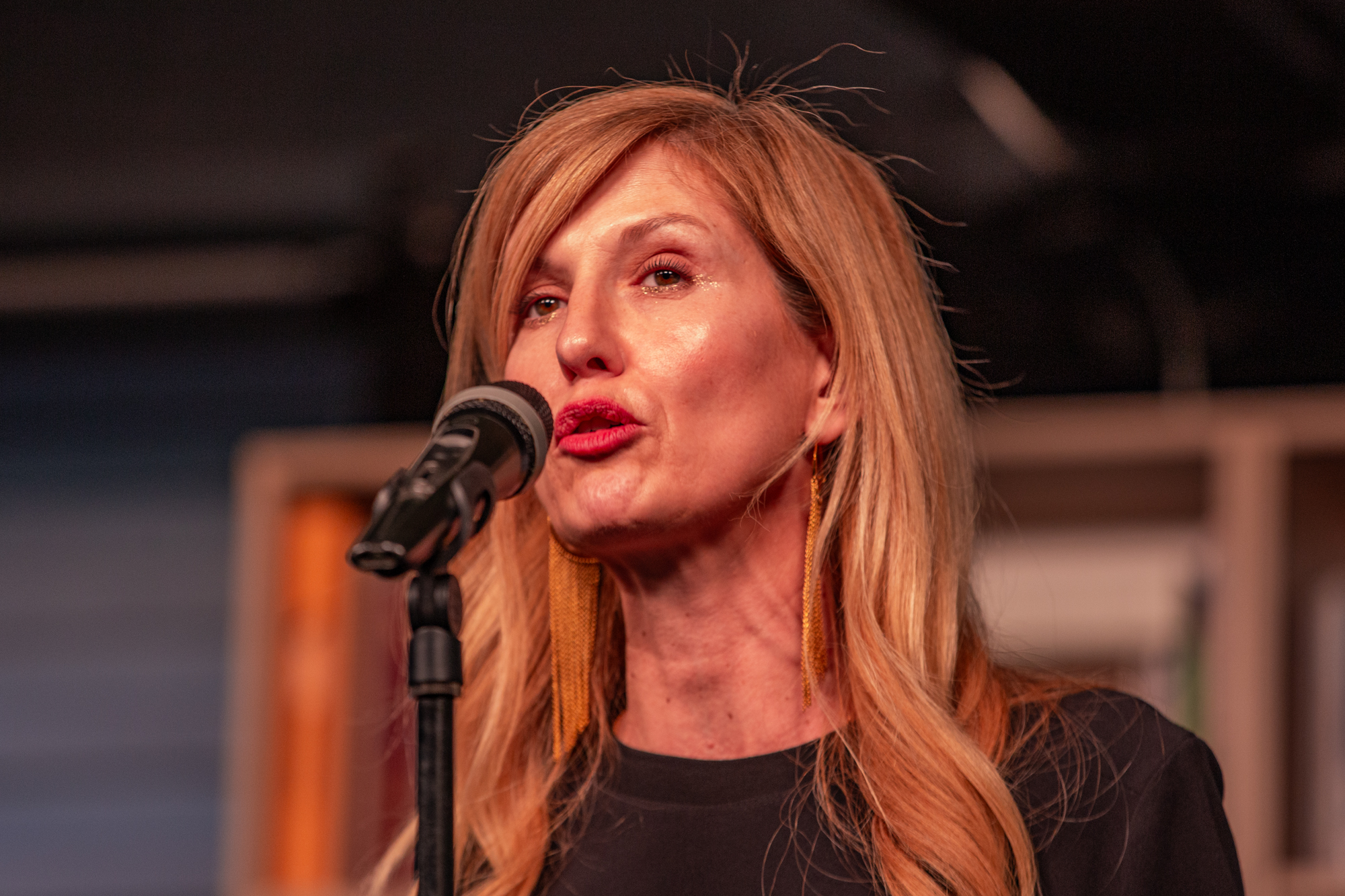
After the Dejan Anastasijević award, Barbara Matejčić also received a special recognition of the European Press Award for the text about the creation of a war photograph.
Freelance journalist, researcher and research professor journalism Barbara Matejčić is the winner of the special award of the European Press Prize for the research text “Killing for Photography”.
The text, which was published in 2025 by Novosti in Croatia and BIRN in Serbia, has already been awarded this year’s NUNS with the “Dejan Anastasijević” award for investigative journalism, and now he has received one of the most important European awards in the field of journalism.
The text “Kill for a photograph” through almost thirty direct sources, court files and documentation on war crimes reexamines one of the most famous war photographs from the territory of the former Yugoslavia, raising questions about the role of the photographer, the responsibility of the media and the way violence is documented and remembered.
The research deals with photographs taken during the war in Bosnia and Herzegovina in 1993 in Brčko, when a photographer from Belgrade documented the execution of civilians from an extremely short distance. The photos were distributed by the Reuters agency, and were later awarded the World Press Photo award and became part of the global visual memory of the war.
More than three decades later, Barbara Matejčić investigated how the photographer was able to record the murder from such close range, through so many consecutive shots, and whether the presence of the camera influenced what happened.
“Relying on almost thirty direct sources, as well as court records and documentation on war crimes, she takes a fresh look at a photo that has long been celebrated for its journalistic importance, while simultaneously confronting ethical questions that remained outside the frame,” the European Press Prize explains.
As it is added, this text is a powerful work on war, photography, responsibility and the role of witness. The judges described it as “a fascinating story that opens many hitherto unanswered questions” and “a fantastic piece of journalism with perfect dramaturgy.”
How the text came about
After receiving the award, “Dejan Anastasijević” talked about the text for “Vreme” about how she made this story.
“For me, the whole story about photographs from Brčko began with the book by photographer Sandra Vitaljić War in Pictures: Contemporary War Photography, which also published short interviews with photojournalists who were on various battlefields in Bosnia and Herzegovina and Croatia in the 1990s. Among those interviews was the one with photographer Srđan Ilić, who worked for the Associated Press agency during the war, and in that interview he said that the two kids at the Writers’ Club in Belgrade were practically praised that they paid the killer so that she could take photos of the killings in Brčko. I couldn’t believe what I was reading and that it wasn’t already a big, well-known story,” said Matejčić.
She then started asking around among her colleagues in Serbia and it turned out that a lot of journalists, especially war reporters, knew about that story. So in 2022, she decided to tackle that topic.
“I opened an excel sheet and listed all the sources I needed and all the potential clues. I knew right away that it would take me a lot of time, but that it was important to try to determine what happened. That whole story, not only about how the photographs were created, but also how they traveled around the world and brought glory to the photographer, as well as how things were done in the war, is the story of our profession. Although I was too young to be a war reporter, I consider that to be my professional legacy,” she said. is Matejcic.
The research lasted almost three years. Matejčić said that the most difficult part of the job was finding and contacting all actors of the event.
“The most difficult thing was to reach everyone involved. I knew that it would be detective work with an uncertain outcome. To finally manage to talk to Goran Jelisić, I needed both ingenuity and luck and it took about a year,” she said.
The complex process involved the search for the main photographer, who some sources claimed had passed away.
“In the end, I managed to reach everyone who is important for that story. I know I have ethical dilemmas in my work, but I didn’t have any important ones here, and those I did, I addressed in the text. At the beginning of the writing, I was more troubled by how to structure that amount of diverse material into a clear story that holds attention,” said Matejčić in an interview for “Vreme”.
Source: Vreme