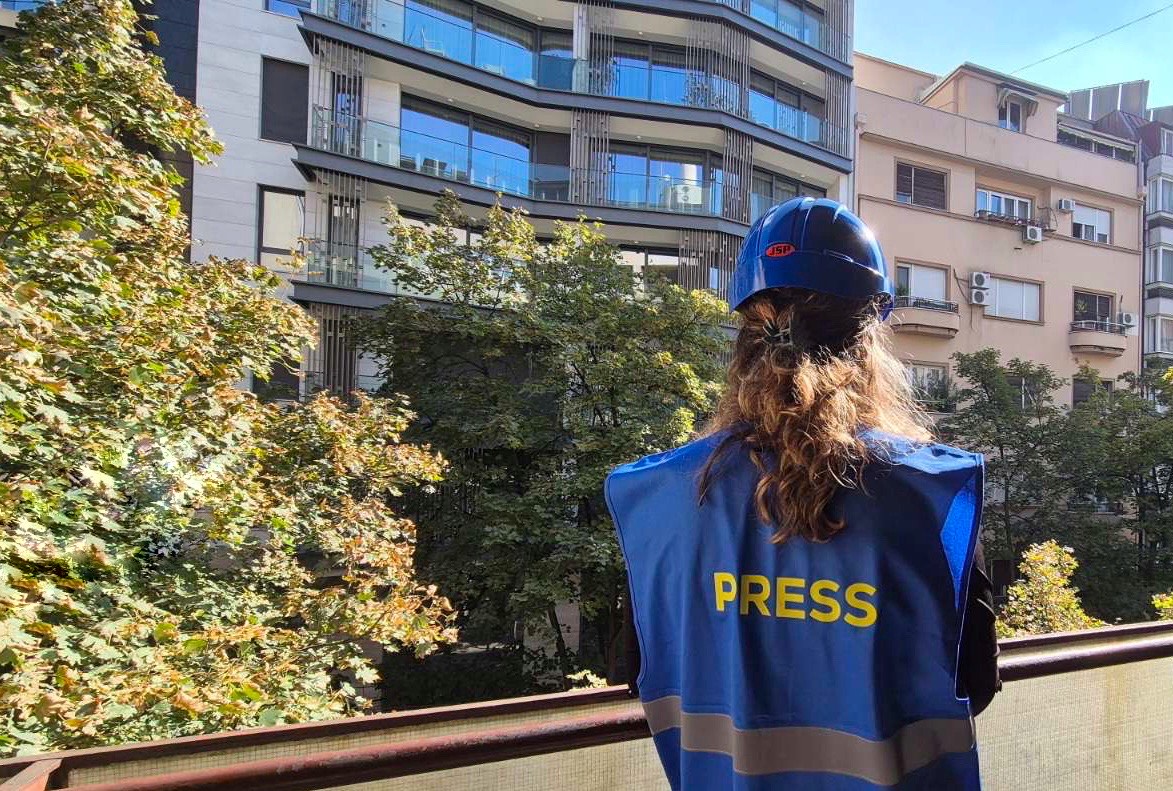
Six journalists have left Serbia over security concerns and are now living in exile, according to Veran Matic, president of the Management Board of the Association of Independent Electronic Media (ANEM) and a member of the Permanent Working Group for the Safety of Journalists.
Matic told N1 he had personally assisted in the relocation of six journalists, most of whom had faced years of death threats, serious security threats and organised targeting campaigns.
The latest case is military analyst and journalist Aleksandar Radic, who left Serbia citing concerns for his family’s safety. The Higher Public Prosecutor’s Office in Belgrade subsequently filed a criminal complaint against him over allegations of preparing acts against Serbia’s constitutional order and security and disclosing classified information.
Radic, who was the first to tell N1 that a sonic weapon had been used against protesters in Belgrade on March 15, 2025, said he decided to leave after his apartment was searched and pro-government media published surveillance footage of him and his minor daughter.
“My daughter, who turns 16 in a few days, became a target,” Radic said in a written statement to the Beta news agency. “What do you do when there are many enemies and they threaten your child? We went abroad.”
Writer, columnist and television host Marko Vidojkovic has meanwhile been living in exile for more than three years, after leaving Serbia in early 2023.
Matic warns of broader pressure
The identities of some of the other journalists have not been made public at their request.
“Almost all have characteristics in common: for years they were exposed to death threats, serious forms of security threats and organised targeting campaigns, while the perpetrators remained unpunished,” Matic said.
He warned that journalists’ children, spouses and parents were increasingly being used as an additional means of intimidation.
According to Matic, pressure on journalists is not limited to explicit threats but includes what he described as “hybrid forms of persecution” combining media campaigns, institutional pressure, economic exhaustion, surveillance and legal uncertainty.
He also warned that the disclosure of details of Radic’s private communications with journalists could have a chilling effect on media freedom.
“This case therefore goes beyond the fate of one man. It could have long-term consequences for the freedom of journalistic work in Serbia,” Matic said.
He described journalists leaving the country because of security concerns as a broader warning about democracy, the rule of law and media freedom.
“A society from which professional journalists leave because they cannot be safe or free to do their jobs loses much more than a few experienced people – it loses the ability to critically examine its own reality,” Matic concluded.
Source: N1