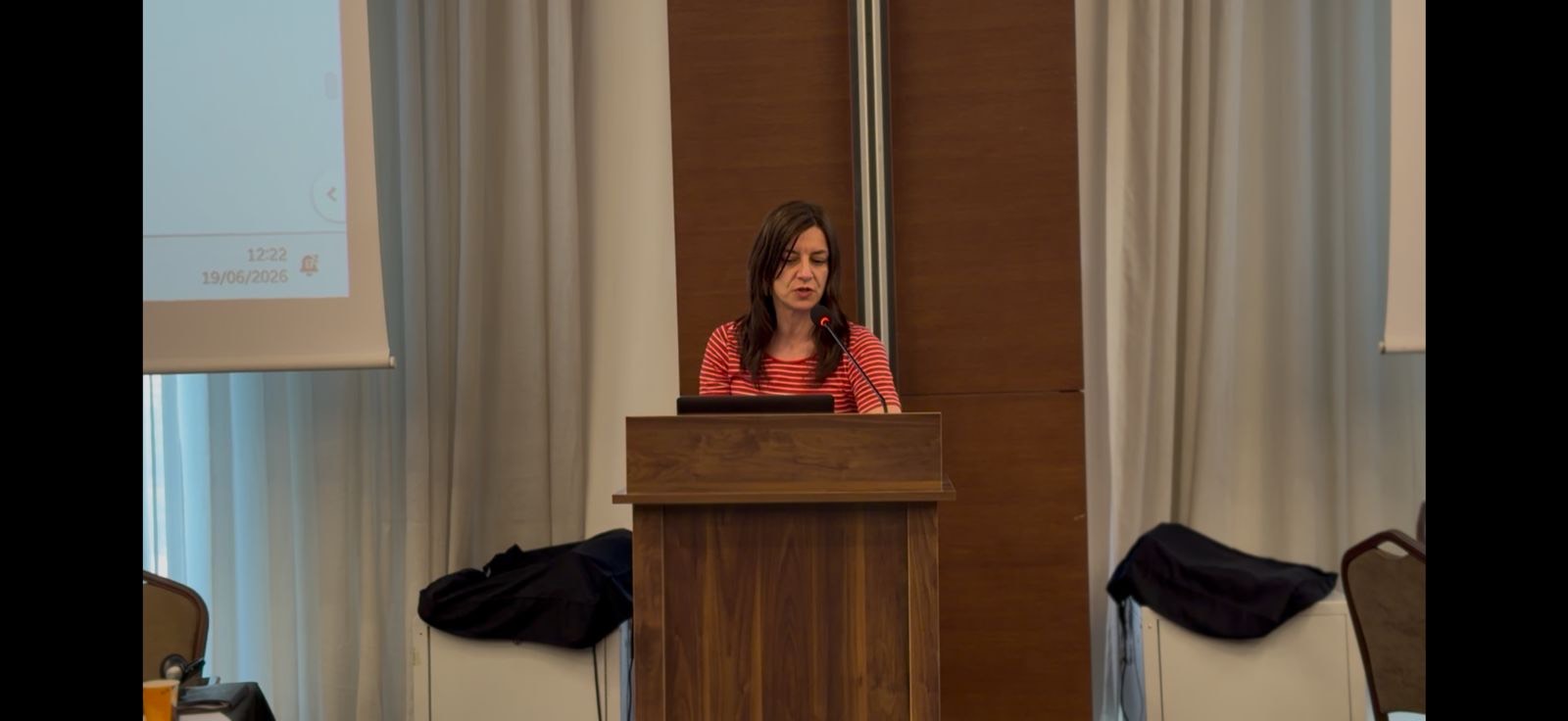
The General Assembly of the European Federation of Journalists (EFJ), meeting in Ankara on 18–19 June 2026, today adopted an emergency resolution calling for the withdrawal of the award granted by World Press Photo in 1993 to photographer Bojan Stojanović. The resolution was submitted by the Independent Journalists’ Association of Serbia (NUNS).
The resolution concerns a photograph depicting the execution of Husein Kršo, a Muslim civilian, during the war in Bosnia. The photograph’s original caption falsely identified Kršo as a Muslim sniper allegedly firing on a Serbian refugee column.
Although World Press Photo later amended the caption after evidence established that he was a civilian, the award itself was never revoked.
The resolution specifically cites the investigative article “Killing for a Photograph” by journalist Barbara Matejčić, which presents credible evidence suggesting that the photographers were not present at the scene by chance. Testimony before the International Criminal Tribunal for the Former Yugoslavia (ICTY), including that of Goran Jelisić (a former police officer convicted of war crimes and sentenced to 40 years in prison), indicates that police officers deliberately arranged for photographers to witness and document the killing of Muslim detainees Husein Kršo and Hajrudin Muzurović for propaganda purposes.
As emphasized during the presentation of the resolution, the case goes beyond a mistaken caption or the uncertainties of wartime reporting. It raises the possibility that a photograph produced as part of a propaganda operation, one that at the time misrepresented the identity and dignity of a civilian victim of a war crime, continues to hold one of the most prestigious awards in photojournalism.
On 28 April 2026, NUNS and the BH Journalists Association formally requested that World Press Photo revoke the award. On 3 June 2026, the organization rejected the request, stating that its review of the documentation and archival materials in its possession had not produced verifiable evidence warranting such action. However, testimony before the ICTY exists, a substantial investigative report has been published, two journalists’ associations have filed formal complaints, and the family of Husein Kršo continues to await official recognition.
Through the adopted resolution, the EFJ calls on World Press Photo to revoke the 1993 award, formally acknowledge to the family of Husein Kršo the harm caused by the false representation of the victim and the continued retention of the award, and provide appropriate contextual information alongside the photograph in its archives and future communications. The EFJ also expresses its full support for a public petition to be launched by member organizations of the SafeJournalists Network and calls on the international journalism community to support this demand.
NUNS believes that this case raises fundamental questions about ethical responsibility in photojournalism, the dignity of victims of war crimes, and the obligation of leading international institutions and organizations to act when serious evidence calls previously awarded work into question. The ethical standards of journalism require a clear distinction between documenting war crimes and participating in the propaganda that surrounds them. The family of Husein Kršo has been waiting for more than thirty years. By adopting this resolution, the EFJ sends a clear message: the journalism profession must not remain silent when truth, accountability, and the dignity of victims are all at stake simultaneously.
The full text of the resolution can be downloaded here.