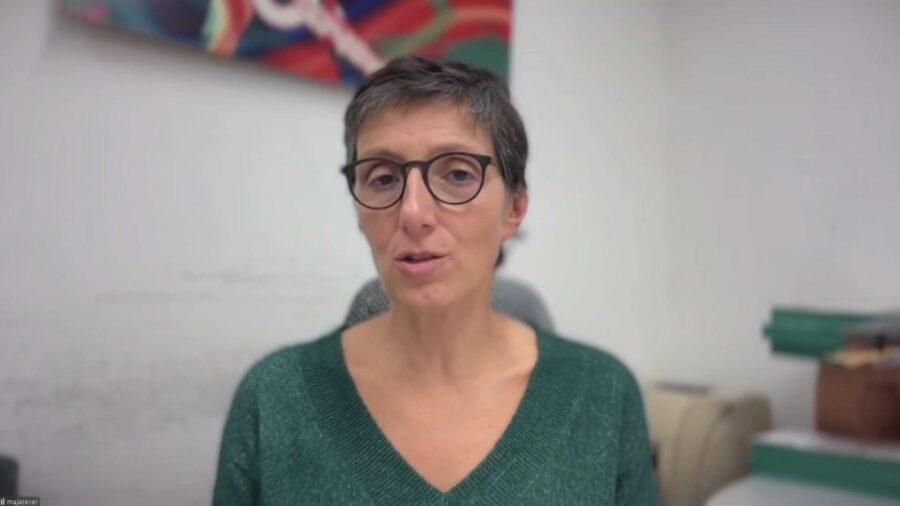
“At the European Federation of Journalists (EFJ), we have long followed the work of N1 newsrooms across all the countries where they operate, and we maintain a continuous collaboration with their journalists. We have supported them whenever they faced attacks, clearly condemned the perpetrators, and warned that N1 journalists are frequent targets of political and public pressure due to their professional work,” Maja Sever, President of the EFJ, told Deutsche Welle (DW).
Sever particularly highlighted N1 Serbia as the outlet that faces the most frequent pressure, DW reported.
“For years, the N1 newsroom in Serbia has effectively taken on the responsibilities of a public service broadcaster, and through its professional journalism, it has played a crucial role in keeping the public truthfully informed. This is precisely why, even before Igor Bozic was replaced, we sought clear explanations from the new management regarding leadership changes, editorial policy, and the direction the outlet is taking. Our position is clear: N1 is vital for pluralism and democracy – not only in Serbia but also more broadly,” she said.
Sever emphasized that following Bozic’s removal, the EFJ warned that this was not a routine personnel decision or something that could be dismissed as mere internal restructuring.
“In this political and media environment, such moves inevitably raise questions about true motives. The removal of Igor Bozic stands in stark contradiction to Brent Sadler’s statements regarding his intention to shield N1 from political interference and build trust among staff,” Sever noted.
According to Serbian media reports, Brent Sadler was officially registered as the new director of N1 TV on Wednesday, April 8, replacing Igor Bozic, DW reported.
The specific case of N1 Serbia
The EFJ considers the recent developments at N1 Serbia to be an alarming sign for the future of independent journalism in the country.
“It is heartening to see how colleagues have stood by their editor Bozic, and how citizens supported the newsroom through protests. I cannot understand why a man with such a long and successful career in the world’s leading media outlets would replace, and effectively dismantle a newsroom that has for years resisted fierce attacks from the highest levels of government, yet continued to tell the truth without compromise or fear, and practice honest journalism,” Sever said of Sadler.
“It is crucial,” she added, “to see how future processes involving N1 and the Adria News Network (ANN) group unfold, given the expected sale, and whether the final outcome will see these outlets fall under political control through a new owner.”
The EFJ President also pointed out the unique nature of the N1 Serbia case, primarily due to its ability to operate under such difficult conditions.
“The N1 case is specific because, for years, this outlet was an exception in a system already deeply burdened by political influence, censorship, and media capture. In Serbia, where a large portion of the media landscape is under direct or indirect government influence, N1 represented a rare platform for critical and professional journalism,” Sever said.
Can a media owner “do whatever they want”?
Sever also addressed the claim made by some that N1 is a private media outlet where the owner has the right to make all key decisions, including personnel changes.
“Media is not just any private business, it serves a key social function. Outlets influence how citizens are informed and how democracy functions. Invoking private ownership is often used as a justification for decisions that have much broader consequences. In reality, especially in environments like Serbia, the market is not truly free.”
“There are political and economic pressures that affect both owners and business decisions,” Sever observed. “That is why the issue cannot be reduced to ‘the owner can do whatever they want.’ The real question is who is truly influencing editorial policy and in whose interest. If there is even the slightest suspicion that political power centers are shaping content, then it is no longer a private matter, but a matter of public interest and democracy.”
Source: N1