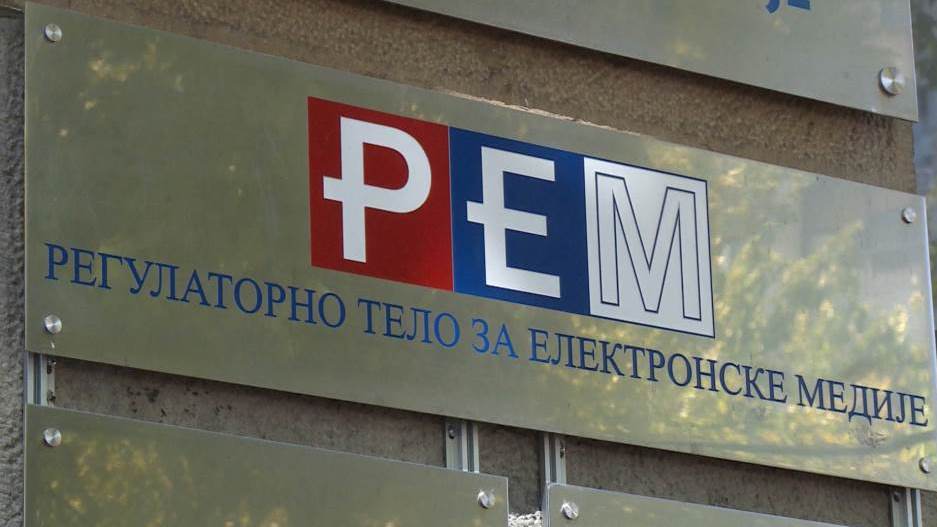
For more than a year and a half, Serbia’s electronic media has operated without oversight due to the ongoing vacancy of the Regulatory Authority for Electronic Media (REM) Council. Brussels has repeatedly emphasized that reviving this body is a critical condition for opening Cluster 3 in Serbia’s EU accession talks. The government is under pressure to meet these European obligations, but it remains wary of losing its majority on the Council as a key tool for maintaining its influence over the media.
Top European Union (EU) officials, including European Council President Antonio Costa and European Commission President Ursula von der Leyen, recently delivered the same message: the REM Council, alongside judicial reform, election laws, and a foreign policy aligned with that of the EU, is the key to further EU integration. This particular requirement appears to be a major sticking point for Serbia President Aleksandar Vucic.
“I have no idea how we are going to solve this. You are essentially asking us to just hand over a majority in certain bodies to someone else. That doesn’t happen anywhere in the world, yet some people want it to happen here in Serbia,” Vucic said.
The relevant minister is equally short on solutions. “We certainly need the REM. Unfortunately, the issue has become a political one when it should be professional. This institution carries a heavy burden of responsibility,” Information Minister Boris Bratina said.
There has been no REM Council for over a year and a half, and media associations have grown increasingly cynical following failed attempts to elect new members.
“For us to enter into a new procedure now – I don’t think there is any need for that, because we have already participated in those processes. This suggests that the new procedure, if there is one, or a continuation of the old one… there has effectively just been a phase of hibernation and inactivity. I do not expect the outcome to be in accordance with the law,” said Rade Djuric of the Independent Journalists’ Association of Serbia (NUNS).
The current reality is already operating outside legal bounds because, without the REM Council, the media landscape is awash with hate speech and abusive language.
“We are essentially witnessing an arrogant rampage by tabloid TV stations. The level of hate speech and fear-mongering is almost unbelievable, especially in this pre-election phase,” Djuric added.
Currently, there are no penalties for the “targeting” of journalists and students or for hate speech directed at other nations and peoples. Such rhetoric is common on outlets like the pro-government Informer TV, where Minister Bratina is a frequent guest.
“All instances of hate speech or provocative speech that creates ill will should be sanctioned. However, in my view, it is a sin to attack one television station. Once we get the REM sorted and we all start viewing each other as fellow journalists and colleagues, I think we will be on the path toward more peaceful relations,” Bratina said.
The REM Council was on the verge of being formed late last year after eight members were selected. However, the ruling majority refused to vote for the ninth member – a representative of national minorities – following opposition from the Alliance of Vojvodina Hungarians (SVM). Subsequently, four independent candidates resigned, no new applicants came forward for the vacant seats in the following round, and the entire process has since been at a standstill.
Source: N1