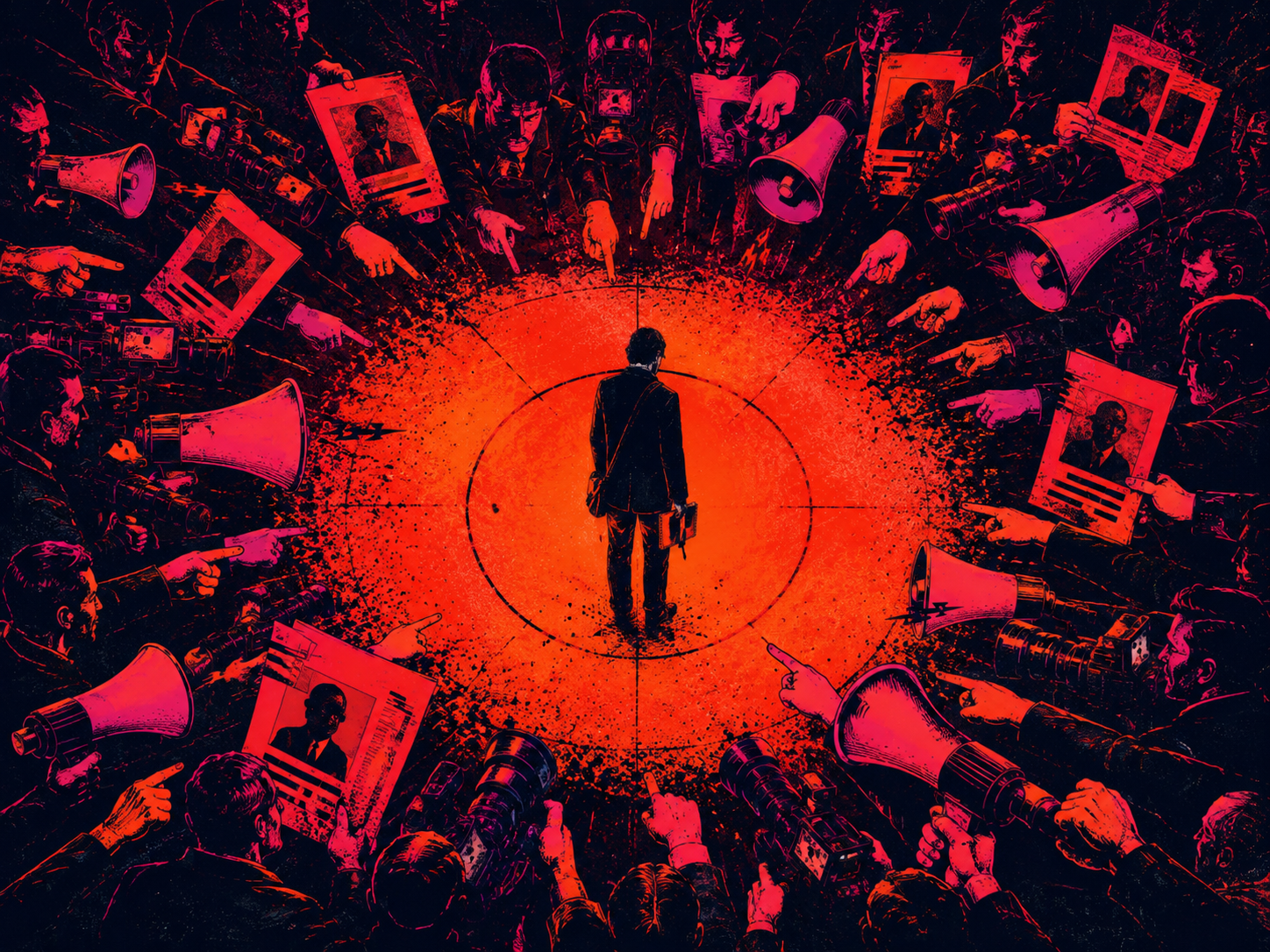
In June 2026, the Independent Journalists’ Association of Serbia (NUNS) recorded a total of 21 cases involving journalists and media workers. A total of 10 physical attacks were recorded, along with seven cases involving death threats and threats to the physical safety of journalists, and four cases involving other types of threats.
The number of recorded attacks is rising again, while the threats directed at journalists were brutal and highly dangerous. Of particular concern are organised campaigns targeting not only journalists and media outlets, but also other citizens and students in connection with alleged dissemination of false information about police action and the “preparation of a simulation of the use of a sonic cannon”. Organised by the public prosecutor’s office and representatives of the authorities, and supported by the propaganda machinery of tabloid media, highly dangerous narratives were created and actions were taken against individual journalists and media outlets.
Dangerous Threats Against Journalists and Newsrooms
A letter sent from Slovenia arrived at the address of N1 television, containing a threat to kill the loved ones of journalist Danica Vučenić. Among other things, the letter stated: “We will kill your loved ones, you mare.” The journalist has previously faced various forms of threats and pressure, especially different forms of targeting campaigns in pro-regime media.
After Bečejski mozaik reported from a public gathering, a series of brutal threats and insults against editor and journalist Kristina Demeter-Filipčev followed on the social media pages of this portal. The messages contained threats of violence and hanging, hate speech and incitement of ethnic hatred. Among the messages sent were threats such as “this is how you will hang too”, “f*** you, the journalist, and the students… all under the sword”, as well as ethnic insults and messages questioning the journalist’s origin and ethnicity.
Journalist Vladimir Mitrić, correspondent of Večernje novosti from Loznica, received a threat on Insajder’s Facebook page, where the programme “Press, Don’t Shoot” was announced. In a comment, Mitrić was told that he “should have been killed with a sledgehammer to the head a long time ago”. Vladimir Mitrić has lived and worked under police protection for more than two decades, after surviving an attempted murder in 2005, when he was brutally attacked with a baseball bat by a former police officer.
The N1 newsroom received very serious threats in a comment on a published article. The same comment also contained a threat against Veran Matić. The threat read as follows: “Again these Ustashas from N1, monkeys, bastards, horses, pigs, lying, you should be set on fire, you Ustasha cattle, this thief Matić, f*** your Ustasha origin, you thief, lying water fan, we f*** your children, we will take your head off, Ustasha bastard, liar, we f*** your loved ones.” The threats were immediately reported to the competent Special Public Prosecutor’s Office for High-Tech Crime.
In a comment on a news item about the attack on Veran Matić in front of the National Assembly of Serbia, a person signed as “Srbin” sent a series of brutal insults and threats to Matić and the N1 newsroom, including calls for violence and direct death threats.
Threats were sent via social media to journalist and editor of portal Pravo u centar from Lazarevac, Marija Popović. From the profile Stojan Marković, with a profile photo showing a person in the uniform of the Serbian Army, the editor of the local media outlet from Lazarevac received a Facebook message saying: “And since I am a military person who never retires, I will shoot at you for 30 minutes, and and then throw you in the sewer.”
The Vranje News portal from Vranje received a disturbing message from an account from which other local media outlets, including Magločistač from Subotica, IN Medija from Inđija and the Južne vesti newsroom, had previously received threats and disturbing messages. A disturbing comment of highly inappropriate content, directed against the children of newsroom members, arrived from the email address [email protected], as Vranje News announced on its Facebook page.
Physical Attacks on Journalists
Veran Matić, journalist and president of the Managing Board of ANEM, was physically attacked on 17 June, at around 8 p.m., in the area in front of the National Assembly of the Republic of Serbia in Belgrade. Matić was attacked while filming with his mobile phone a public gathering of several dozen citizens wearing hats with white ribbons. While he was moving towards the steps leading to the main entrance of the National Assembly, an unknown young man approached him, tried to prevent him from filming and snatched the phone from his hand. The phone was returned to him only after an order was given by a man whom Matić recognised as Đorđe Prelić, known as a former leader of the Alcatraz supporters’ group. After the incident, Matić approached security in the National Assembly building, but they refused to react and referred him to the police.
During the night of 21 June, a car owned by David Gruhonjić, son of University of Novi Sad professor, programme director of the Independent Journalists’ Association of Vojvodina (NDNV) and journalist Dinko Gruhonjić, was vandalised. The severe damage to the vehicle represents yet another in a series of security threats that cannot be viewed separately from the long-standing, organised campaign of persecution against Dinko Gruhonjić. The car’s windows, mirrors and other parts were destroyed.
Freelance journalist and photojournalist Marko Dragoslavić was physically attacked on 24 June while reporting, as he stated, from an illegal construction site in Milan Rakić Street in Belgrade. An unknown person approached him from behind and punched him several times in the head. Although, according to Dragoslavić, he said that he was a journalist, the attacker replied that he “didn’t give a f***” and that he would kill him.
A journalist from TV Forum in Prijepolje was subjected to disturbing remarks and obstruction by workers present on 30 June, while filming a landfill in Druglići near Prijepolje. Several persons tried at all costs to prevent her from filming the fire, while the president of the Municipality of Prijepolje, Drago Popadić, in particular demanded that the journalist stop filming the fire. Local construction contractor Halil Rovčanin got disturbingly close to her face and threatened her, further endangering her safety.
Attacks, Threats and Obstruction of Journalists in Connection with the SNS Rally in Belgrade on 27 June
During the Serbian Progressive Party rally held on 27 June, in Belgrade, three photojournalists – Gavrilo Andrić, Nađa Gavrilović and Marija Stojnić – were taken to the Savski Venac police station after documenting the action of unfurling a banner reading “Students are fighting for you too”. The photojournalists had previously been physically attacked by an unknown person at the moment they entered the building on which the banner had been hung, but the incident ended without serious consequences. After leaving the building, they were detained by police officers, and the police assessed, although there was no legal basis, that they should be taken to the Savski Venac police station, from where they were released several hours later without giving a statement.
Nova TV journalist and reporter Dunja Ranković was exposed to insults, heckling and a physical attack during a live broadcast from an event organised by the Serbian Progressive Party in Belgrade. Immediately before the live broadcast, when she placed the recognisable microphone windscreen on the microphone, dozens of shouted insults followed, and near the end of the live report, a man approached her and threw a water bottle at her. Fortunately, the journalist avoided being hit, while the attacker continued insulting and swearing at her even after the live broadcast ended.
In Niš, on 27 June, Nova TV reporter Ivana Marković was prevented from reporting on the departure of buses to the SNS rally in Belgrade. While the crew was filming a conversation with people, a Niš express bus company driver approached them, asked which television station they worked for, and then, after hearing the answer, hit the journalist on the hand, pushed the microphone and camera, and insulted them.
An Insajder reporting team was obstructed on the same day at the rally by an unknown person who prevented them from doing their job by blocking the filming area with an open umbrella. Without communicating, that person used an open umbrella for more than 15 minutes to block the area that the cameraman wanted to film. Only after some time, when the cameraman and journalist Vojin Radovanović gave up trying to do their job and packed away their equipment, plainclothes police officers approached and removed the person.
Campaign by Government Representatives and Tabloids Against Journalists Over the Alleged “Simulation of the Use of a Sonic Cannon”
As part of an orchestrated campaign in which the public prosecutor’s office also took part, Radar journalist Milan Radonjić became the target of a targeting campaign because of Radar’s cover story titled “The Day Vučić Shot the People in the Back”, which dealt with the use of sonic weapons during the peaceful student gathering on 15 March 2025. After the Higher Public Prosecutor’s Office informed the public that the Service for Combating Terrorism had been ordered to identify those who allegedly “prepared a simulation of the use of a sonic cannon”, and within that framework to “interview all persons who publicly made those claims”, an attack on critical journalists and media outlets began as if on command. The peak of the pro-regime machinery that day was a special programme on the First Channel of RTS, in which Deputy Chief Public Prosecutor Miodrag Marković explained that four groups would be questioned, and that “the third group consists of persons who represented media support, those who posted on social networks or in certain media”, adding: “Their identity is more or less known.” The culmination of the propaganda narrative came the following day, in a special TV Informer programme titled “The Attempted Shooting of Aleksandar Vučić”, in which “traitors” and “destroyers of Serbia” who were allegedly “planning a civil war” were discussed for four and a half hours. Radonjić’s article and photograph were shown intensively. Guests included Serbian President Aleksandar Vučić, Speaker of Parliament Ana Brnabić and convicted war criminal Vojislav Šešelj.
Vojkan Kostić, editor-in-chief of the Beta News Agency, while reporting as a journalist on the search of the apartment of military analyst Aleksandar Radić on 22 June 2026, was served with a summons to report to the Criminal Police Directorate on suspicion of activities linked to alleged preparation of acts against the constitutional order and security of Serbia. Kostić happened to be on the scene and was performing a journalistic assignment, following military analyst Aleksandar Radić, who had been summoned to attend the search of his apartment on suspicion of committing the criminal offence of preparing the violent overthrow of the constitutional order. Police officers were initially very unpleasant towards Kostić, and he understood their messages as intimidation and a warning that, if he continued reporting, he too could become suspected of a criminal offence.
At the order of the Higher Public Prosecutor’s Office in Belgrade, police officers summoned Dejan Zlatanović, owner and editor of the portal Srbin info, for an informational interview over suspicions of allegedly spreading false news about the use of a sonic cannon by state authorities at the protest held on 15 March 2025. Officers of the Criminal Police Directorate questioned Zlatanović for more than an hour about his reporting from the student protest.
Campaigns Against Journalists and Other Attacks
After the publication of an analysis on media reporting related to dealing with the past in the Western Balkans, professor, programme director of the Independent Journalists’ Association of Vojvodina (NDNV) and journalist Dinko Gruhonjić, and research associate and executive director of the Association of Journalists of Kosovo (AJK) Getoarbe Mulici, were subjected to verbal attacks, hate speech and severe targeting. The campaign began with an article published in the tabloid Informer under the headline “Dinko and the ‘Shiptar’ Journalist Supported the Blockaders and Attacked Serbia”, in which the authors were subjected to derogatory, ethnically charged and inflammatory labelling. Of particular concern was the subsequent statement by the Ministry of Information and Telecommunications of the Republic of Serbia, which referred to the analysis and mentioned its authors in an extremely negative context.
Radar journalist Vuk Cvijić was removed from a session of the Teaching and Scientific Council of the Faculty of Medicine in Belgrade. Cvijić came as a journalist to the public session of the Teaching and Scientific Council of the Faculty of Medicine of the University of Belgrade, and the security present did not prevent him from doing so. However, after some time, two security officers asked Cvijić to leave the hall and told him that he could follow the session from outside, because the event was being recorded, after which Cvijić left the room.
Journalist Jelena Zorić was the target of an online scam orchestrated by unknown individuals who misused her identity. According to information published by BIRN Serbia, the scam involved sponsored online advertisements directing users to manipulate content posted on a website designed to imitate the appearance of the BIRN website. The fraudulent article promoted a fictitious investment fund with the aim of persuading citizens to provide their personal information and invest money. The scammers used a fabricated quote falsely attributed to journalist Jelena Zorić, as well as an AI-generated fake photograph depicting her.
A New Attempt to Establish the REM Council
On 25 June, the Committee on Culture and Information of the National Assembly adopted a conclusion suspending the procedure for proposing the ninth member of the Council of the Regulatory Body for Electronic Media (REM), nominated by national minorities, and invited the four members who had submitted resignations – Rodoljub Šabić, Mileva Malešević, Ira Prodanov Krajišnik and Dubravka Valić Nedeljković – to take up their positions in REM.
Before the vote on suspending the procedures, committee chair Nevena Đurić explained that the calling of regular elections for national minority councils was approaching and that, in such circumstances, “there are justified reasons” to wait with the selection of candidates for the ninth member of the REM Council “until the new compositions of the national minority councils are constituted”. The Committee also accepted the proposal that the newly formed REM Council draft a new REM Statute.
In response to the Committee’s conclusion, the REM Council members who had resigned issued a statement saying that it was good that the Committee’s conclusion confirmed that the authorities had given up on the persistent unlawful and discriminatory favouring of one candidate, and that they hoped for a transparent and inclusive procedure for drafting the new REM Statute. However, they also stated that the invitation contained in the conclusion was based on an incorrect interpretation of the provisions of the Law on Electronic Media, both those concerning the legal consequences of submitted resignations and those concerning the postponement of elections, specifying that Article 18 of the Law clearly defines how a resignation is submitted and when it takes effect. They believe that such an interpretation changes explicit legal provisions, which cannot legally be done through a Committee conclusion, which in itself is not sufficient for their further action, because the Committee is not competent to resolve the legal uncertainties that have arisen — only the National Assembly is. Only if the disputed issues are resolved in accordance with the law would the conditions be created for them to assume the functions to which they were elected.
Following the publication of the statement, Nevena Đurić, chair of the parliamentary Committee, submitted to the National Assembly a proposal for the adoption of an authentic interpretation, stating that the provision of Article 18 of the Law on Electronic Media should be understood to mean that a resignation can be considered a declaration of will given after assuming the office of REM Council member, and not the resignation itself submitted to the National Assembly.