The Commercial Court of Montenegro last week granted a request filed by the founders and minority shareholders of TV Vijesti, temporarily blocking changes to the company’s ownership and management structure. The court found that there were sufficient grounds to preserve the status quo until the dispute over the sale of the company’s majority stake is resolved.
In a ruling dated August 12, 2026, issued by Judge Milica Saveljic and served on the minority shareholders, the court prohibited an extraordinary shareholders’ meeting scheduled for September 9 from taking place. It also barred the implementation of decisions that could have paved the way for changes to the company’s ownership structure and representation, Vijesti reported.
United Media holds a 51% stake in TV Vijesti, while the television station’s founders, the Media Development Investment Fund (MDIF), and the other minority shareholders who filed the application with the Commercial Court collectively hold around 49%.
Relations between the shareholders are governed not only by Montenegro’s Companies Act and the company’s Articles of Association, but also by agreements concluded earlier that, among other things, set out the conditions under which shareholders may dispose of their stakes.
In brief
The court found that the transfer of United Media’s stake to Adria News cannot be viewed separately from the announced sale of that company to Alpac Capital, and that there are reasonable grounds to suspect that the founders’ and minority shareholders’ right of first refusal could be circumvented.
Pending the outcome of the arbitration proceedings, amendments to the company’s articles of association have also been blocked, as has any representation before regulators that could pave the way for the transfer of the majority stake from United Media to Adria News.
The founders and minority shareholders welcomed the court’s decision.
Zeljko Ivanovic: “This isn’t Serbia, Vucic’s private state. The institutions are doing their job.”
Right of first refusal at the heart of the dispute
Put simply, a right of first refusal means that a shareholder wishing to sell its stake must, subject to the terms of the relevant agreement, first give the existing shareholders the opportunity to purchase it on the same terms before offering it to a third party.
United Media intended to transfer its stake to Adria News and sought approval for the transaction from the Agency for Audiovisual Media Services (AMU). It also sought to have the transfer formally reflected at an extraordinary shareholders’ meeting, including through amendments to the Articles of Association.
United Media and Adria News are Luxembourg-based companies owned by the Netherlands-based United Group, meaning that, on paper, they are affiliated companies. TV Vijesti’s Articles of Association state that United Media is not required to first offer its stake to the other shareholders if the stake is being transferred to an affiliated company.
However, the founders and minority shareholders argue that this is merely a device designed to prevent them from exercising their rights and acquiring the majority stake, thereby preserving the outlet’s editorial independence. United Group has already announced that it signed an agreement to sell Adria News to a company owned by the Portuguese fund Alpac Capital, with the deal due to take effect subject to regulatory approval in several countries.
In the meantime, United Group has placed around a dozen media outlets it owns in Serbia, Bosnia and Herzegovina, Croatia and Slovenia under the Adria News umbrella in preparation for the announced sale. Alpac Capital owner Pedro Vargas David has also asked Montenegro’s Agency for Protection of Competition for approval to acquire majority stakes in TV Vijesti and Daily Press, the publisher of the Vijesti daily newspaper and its namesake news website.
When your co-owner tries to cut you out
“Imagine that you co-own a house with another person. You have agreed that if they ever want to sell their share, you have the right to buy it first. But that person decides to first ‘give’ their share to their brother, so that the brother can sell that half of the house to a stranger the next day, without anyone ever asking you anything,” a legal expert told Vijesti, offering a simple illustration of the situation.
In its ruling, the Commercial Court granted the minority shareholders’ request and imposed an interim measure prohibiting the extraordinary meeting of TV Vijesti shareholders from taking place. It also barred United Media from granting power of attorney to Brent Sadler, or anyone else, to represent TV Vijesti in proceedings before the AMU and the Ministry of Culture and Media, particularly in connection with actions required to obtain approval for changes to the company’s ownership structure.
The court prohibited United Media and Adria News from issuing any orders or instructions to TV Vijesti’s governing bodies concerning changes in ownership or representation before the competent authorities. It also ordered the Central Registry of Business Entities (CRPS) to record the interim measure in order to prevent any corporate changes from being entered in the register.
Judge Saveljic ruled that the interim measure will remain in force until the arbitration proceedings are concluded, provided that the minority shareholders initiate arbitration within 45 days. United Media has the right to challenge the ruling, with any objection to be decided by a panel of the Commercial Court.
In her reasoning, Judge Saveljic accepted the minority shareholders’ key legal arguments, Vijesti reported.
Without an interim measure, risk of a fait accompli
The court accepted the argument that the transfer of United Media’s stake to Adria News cannot be viewed as an isolated transfer to an affiliated entity, which would otherwise be permitted under the Articles of Association. Taking into account the public announcement that Adria News is to be sold to Alpac Capital, the court concluded that there were reasonable grounds to suspect that the transfer was merely an intermediate step intended to circumvent the minority shareholders’ right of first refusal and ultimately hand control of the company to a third party.
According to Vijesti, the court also found that United Media, despite holding a 51% stake, does not have the authority to unilaterally grant powers of attorney to third parties such as Brent Sadler to represent TV Vijesti itself. The court confirmed that such authority rests exclusively with the executive director or the company’s governing bodies in accordance with its Articles of Association, rather than directly with the majority shareholder.
The court accepted the argument that, under the Companies Act, amendments to the company’s Articles of Association require a qualified majority, meaning United Media cannot lawfully adopt the proposed amendments introducing the position of authorized representative with its 51% of the voting rights alone.
The court also agreed with the minority shareholders that allowing the proceedings before the media regulator, the AMU, to continue and registering the changes with the CRPS could create a fait accompli that would be impossible or extremely difficult to reverse, even if the minority shareholders were ultimately successful in arbitration.
It further accepted that the injunction would not interfere with the television station’s ordinary operations, but would merely prevent the disputed ownership and management changes from being implemented pending a final decision by the arbitral tribunal.
In issuing the ruling, the Commercial Court did not decide who will ultimately own the 51% stake in TV Vijesti, nor did it make a final determination that the right of first refusal had been violated. Rather, it found that without judicial intervention there was a risk that changes would be implemented “whose reversal would be significantly more difficult,” potentially rendering any subsequent arbitration award meaningless and making it difficult for the minority shareholders to exercise their right to purchase the majority stake first.
The court also found that, without the interim measure, there was a risk that the minority shareholders’ ability to exercise their rights would be “frustrated or significantly impeded,” while allowing the steps already under way to continue could result in changes that would undermine the purpose of any future arbitration proceedings.
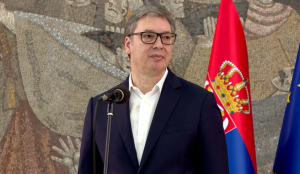
After Vargas David announced in June that he intended to acquire media outlets in Montenegro, Vijesti’s minority shareholders accused him of acting in coordination with Serbian President Aleksandar Vucic, who they allege is seeking to take control of the remaining independent media outlets critical of him in Serbia and elsewhere in the region, including Vijesti.
Ivanovic: Preliminary confirmation of right of first refusal
Speaking on behalf of the minority shareholders, Vijesti co-founder and chairman of the board Zeljko Ivanovic said it was particularly significant that the court had accepted their argument that the transfer of United Media’s stake to Adria News could not be considered separately from the previously announced sale of Adria News to Alpac Capital, “which violates our right of first refusal.”
“It is particularly important to us that the court found that the minority shareholders had demonstrated a credible likelihood that appointing Brent Sadler as an authorized representative in proceedings before the Agency for Audiovisual Media Services could result in a violation of minority shareholder rights, including our right of first refusal,” Ivanovic told Vijesti.
He stressed that “the 2022 sale of a portion of United Media’s shares was carried out under a special legal framework that gives minority shareholders decisive influence over the appointment of management and the editorial leadership, as well as the aforementioned right of first refusal.”
“We are pleased that the first court ruling on this issue amounts to a preliminary confirmation of those rights — and that United Media must first offer its 51% stake for sale exclusively to us, the owners of the remaining 49%. Only if we decline to acquire United Media’s stake would it be able to offer its shareholding to third parties.”
After it was reported on Monday that Vargas David had become a director of companies publishing media outlets in Serbia that are critical of Vucic even before receiving regulatory approval — although it remains unclear whether this is lawful — some media outlets in Montenegro reported in the same coverage that the “takeover of Vijesti” had also begun, Vijesti said.
“All the spin from Vucic’s propaganda machine, from RTCG to Borba, is futile. Their hopes of taking over Vijesti through this controversial tycoon-backed scheme will be dashed, just as we promised our readers and viewers almost a year ago, when Vucic embarked on this takeover campaign. This is not Serbia. Montenegro is, after all, on the doorstep of the EU. It is not the private state of Vucic — neither Aleksandar nor Oskar — so the institutions are doing their job by upholding the law and protecting rights,” Ivanovic said.
Source: N1