The Independent Journalists’ Association of Serbia (IJAS) recalls that 27 years ago, one of the gravest crimes against media workers in Europe took place – the bombing of the Radio Television of Serbia building, in which 16 employees were killed.
During the night between April 22 and 23, 1999, at 2:06 a.m., while the news was being broadcast, a NATO missile struck the RTS building in Aberdareva Street in Belgrade. The following lost their lives in the attack: Jelica Munitlak, Ksenija Banković, Darko Stoimenovski, Nebojša Stojanović, Dragorad Dragojević, Dragan Tasić, Aleksandar Deletić, Slaviša Stevanović, Siniša Medić, Ivan Stukalo, Dejan Marković, Milan Joksimović, Branislav Jovanović, Slobodan Jontić, Milovan Janković, and Tomislav Mitrović.
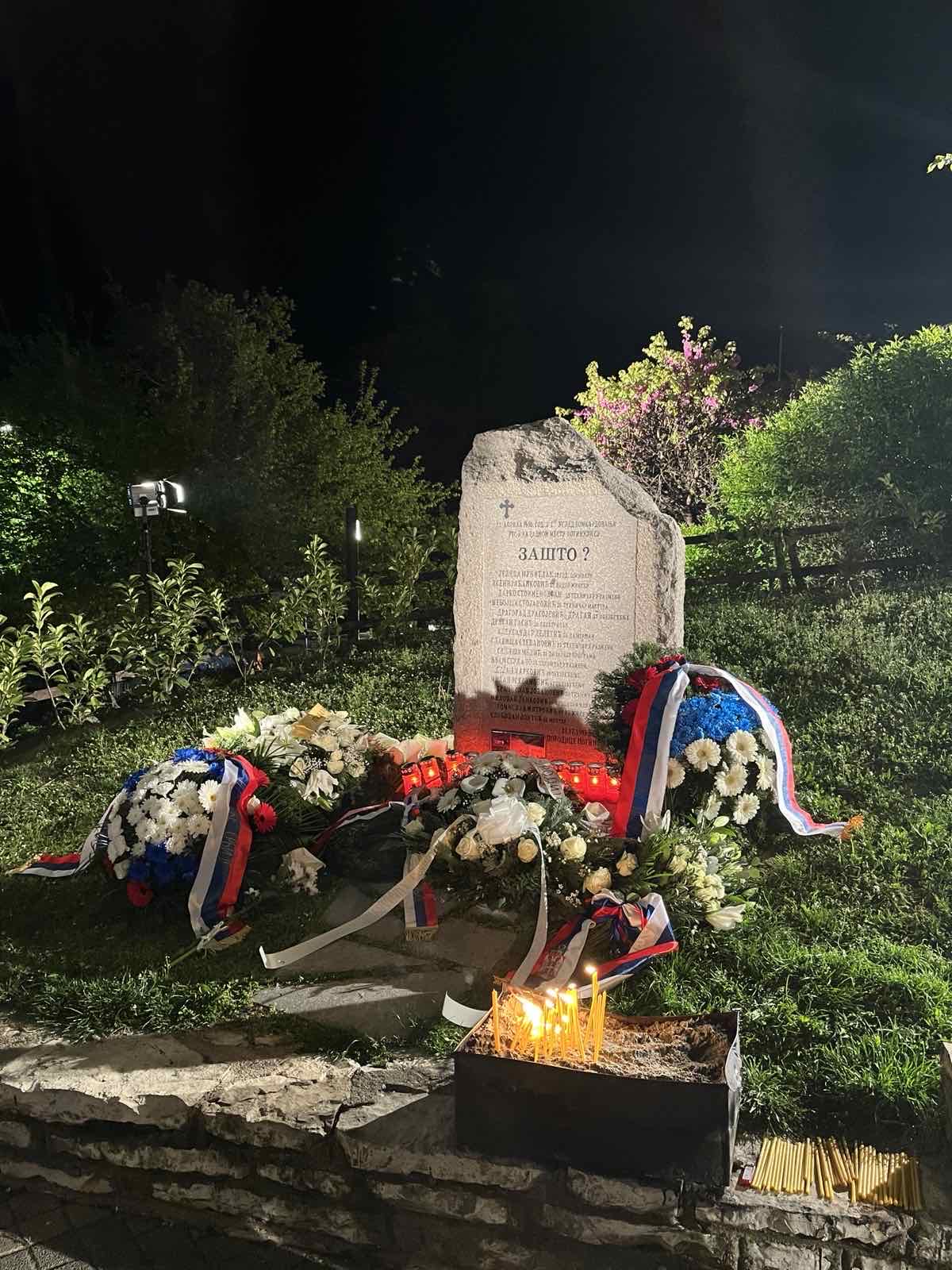
IJAS reminds that, as every year, this night was commemorated by laying wreaths and paying tribute in front of the “Why?” monument in Tašmajdan Park.
The attack on RTS was a crime. The fact that this media house was used as a propaganda tool by the regime at the time cannot justify its bombing, nor the killing of civilians who were at their workplace. International journalistic organizations, including the International Federation of Journalists and Reporters Without Borders, immediately condemned the attack, warning that it set a dangerous precedent that could legitimize attacks on media in future conflicts.
At the same time, responsibility for the deaths of RTS employees has never been fully clarified. Although the then director of RTS, Dragoljub Milanović, was convicted for failing to take measures to protect and evacuate employees, the question of responsibility of other relevant institutions and individuals remains open. Despite knowing that NATO had placed the RTS building on its list of legitimate targets and had announced the bombing, employees were not evacuated but were knowingly left at risk, and their deaths were subsequently misused for propaganda purposes by the regime at the time. Furthermore, it has never been established who within NATO structures made the decision to target a facility known to house civilians.
We remind that the investigation into possible orders leading to the sacrifice of RTS workers was halted and has not been resumed to this day. IJAS once again calls for the continuation of this investigation and for the full chain of responsibility to be determined, both among domestic and international actors.
Unfortunately, the bombing of RTS did not remain an isolated case. Similar attacks on media outlets and journalists have continued in the years and decades since, including in the last decade, in various parts of the world – from the Middle East to Ukraine. In these attacks, newsrooms and media infrastructure have been destroyed, and journalists and media workers have lost their lives. Such events confirm that the dangerous precedent established at the end of the last century has not been overcome, and that there remains a serious risk that media outlets may be treated as legitimate targets – representing a grave violation of international humanitarian law and a direct attack on freedom of information.
IJAS expresses deep respect for the fallen colleagues and solidarity with their families. Their deaths remain a lasting reminder of the price media workers may pay in times of conflict, as well as of society’s obligation to ensure truth and justice.
May they rest in peace.
Belgrade,
April 23, 2026.